Lion in Winter
The child, indeed, is father of the man

Winter might conjure pleasant memories of playing in the snow (or unpleasant ones of shoveling it), but it is hardly a season most of us would consider symbolic of childhood. We more naturally associate the “winter of life” with a time when it is only our hair, if we even still have any, that is snowy.
Yet, the earliest stage of life is precisely what winter represents, according to Rabbi Yehudah Levo’i ben Bezalel, the famed 16th century Jewish mystic, mathematician and philosopher, the Maharal of Prague, in his Gur Aryeh supercommentary on Rashi (Genesis 26:21).
There he assigns a stage of human life to each of the year’s seasons. A modern mind might associate nature’s annual coming-to-life in spring with childhood, the warmth of summer with youth, autumn with pensive middle age and cold, slow moving winter with life’s later years – think “Old Man Winter.” The Maharal, though, described things differently. He regards autumn, when leaves are shed and nature seems to slow down, as corresponding to older age; summer’s warmth and comfort to represent our middle-years; spring to reflect the vibrancy and energy of youth. And winter to evoke childhood.
Childhood?
On the surface, to eyes unaided by deeper wisdom, it might indeed seem strange; winter, after all, is a stark time, a season barren of activity and growth.
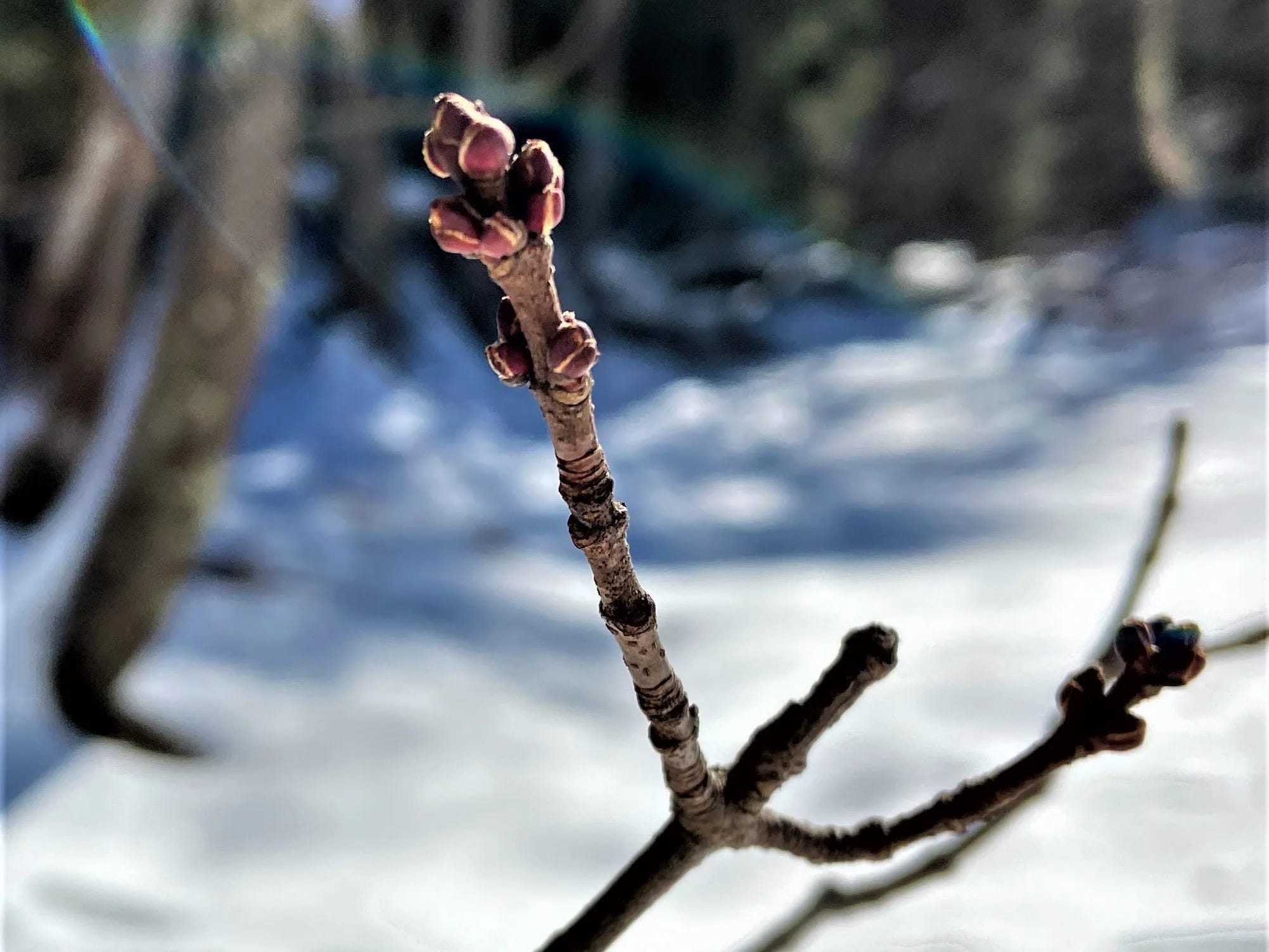
But the superficial betrays the reality. When spring finally arrives each year, after all, the new leaves haven’t appeared ex nihilo. The buds from which they emerge have been developing for months, the sap in the seemingly dormant trees was rising even as the thermometer’s mercury was falling. The evidence of life that at last presents itself with the approach of Passover has been actively preparing its case since Chanukah.
See for yourself. Go outside and inspect the leafless trees’ branches. The buds may be biding their time, but they are clearly there, ready to explode with green when commanded.
Winter, in other words, evokes life’s potential. And so, what better metaphor could there be for childhood, when the elements that will emerge one day as an adult are roiling inside a miniature prototype, when chaos may seem to be the operative principle but when potential is at its most powerful? The Child, after all, as Wordsworth put it, is indeed “father of the Man.”
In fact, we humans are actually compared to trees, in Deuteronomy (20:19). Even though the comparison might be read as a quizzical “Is man a tree of the field,” some commentaries, like Ibn Ezra, read the statement as a straightforward comparison. And mystical texts take that approach as well.
And so, here in deep freeze, the Maharal would have us think about the potential that can lie in apparent chaos.
It’s a timely thought for other reasons too.
Although it is yet a month away, Purim beckons. The holiday when we celebrate the turning of a seemingly hopeless and tragic situation into a joyous one. Queen Esther – whose other name was Hadassah, Hebrew for “myrtle branch” – was the bud, and when the right time came, she blossomed.
And this time of Jewish year is also when the Torah reading around the world is about our ancestors’ exodus from Egypt and their journey to Mount Sinai – about how, in the oppressive prison that was ancient Egypt, a redeemer came of age and, at divine command, brought a people to bloom.
So a conspiracy of factors pushes us to ponder the power of potential – in Jewish history (Esther and the exodus); in the seasons of the year (those winter buds and sap); and in life (illustrious people who were all once childish ones).
It’s a thought that should reassure and animate us, even those of us whose hair is the color of fresh snow. For what emerges from the Maharal’s observation and Jewish history and the seasons is a lesson: What matter more than how many years may have managed to get behind us are the potentials we still carry within us.
–––––––––––––––––––––––––––––-
My most recent Ami Magazine column, about Jews asserting a presence at the Temple Mount, can be read here.
And an interesting thought on parshas Yisro is here:
IF YOU HAVEN’T DONE SO YET, PLEASE SUBSCRIBE, AND SHARE THIS WITH OTHERS .
THANKS!