Specious Speciation
I'm a heretic

The below is an edited version of an essay that appeared in Tablet Magazine in 2015.
Revisions to the theory of evolution are the rule rather than the exception.
From Lamarckism to classical natural selection to Darwinism to the Modern Synthesis, evolution theory has, well, evolved. But whatever mechanisms are believed to serve as the engine of evolution, the theory’s fundamental idea remains: A simple form of life, having somehow sprung from inanimate matter, came to yield all the organisms in the earth’s biosphere.
I’m a Jewish heretic. I don’t mean I’ve forsaken (as some famously have done) traditional Orthodox Jewish belief and practice for a libertine life. My heresy is my reluctance to accept an orthodoxy so deeply entrenched in contemporary society that its rejection summons a hail of derision and ridicule, and results in effective excommunication from polite society. What I can’t bring myself to maintain belief in is… evolution.
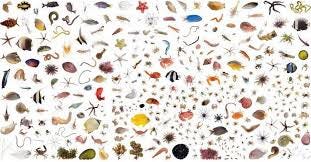
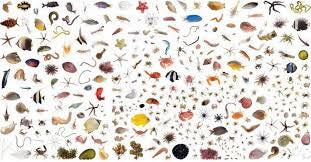
I should qualify the statement somewhat. I fully understand that physical traits within a set of organisms can and do, because of environmental and other stimuli, become normative. Elements that prove useful will, over time, be retained, and those that prove non-advantageous will disappear. I can accept, too, that entirely new traits may seem to appear as well, although research has shown that what may appear to be new is already coded in a species’ genotype, with only its expression being novel. What I cannot bring myself to accept, though, is speciation, the notion that the approximately 10 million distinct species on earth (along with another estimated 20 million marine microbial organisms and an estimated trillion microbial species) all developed from a common ancestor.
Those numbers, it must be stressed, don’t refer to individual creatures, but rather to distinct species. And, to make the head-wrapping-around-the-thought even more daunting, scientists estimate that the above numbers reflect only a mere one percent of all species that existed on earth, 99% of which are extinct. What’s more, new species are constantly being discovered, like a slew of previously unknown animals and plants cataloged not long ago in the Greater Mekong region.
According to the high priests of Scientism (and the well-washed masses that venerate them), all of that variation derives from one prehistoric single-celled organism. And that ur-organism itself sprung from inanimate matter.
When I was a schoolboy, back in the 1960s, we were breathlessly taught about the 1953 Miller-Urey experiment, in which amino acids were developed from inanimate matter and electricity. We fourth-graders were assured that the creation of life in the lab itself was only a few more years away. Today, more than a half-century later, not only has the scientific establishment effectively given up on accomplishing such alchemy, it has effectively relegated the question of just how life managed to emerge from mere minerals to the file labeled “unimportant” – as a question independent from the idea of speciation. But it is in fact not only important but very much connected to speciation; it is, conceptually speaking, its very first step.
Sir Fred Hoyle, who was an astronomer but also a deep thinker about science, called the emergence of life from a primordial organic soup “nonsense of a high order.” He was an atheist and a Darwinist, but felt compelled nonetheless to compare the likelihood of the random emergence of the simplest cell to that of “a tornado sweeping through a junk-yard… [and] assembl[ing] a Boeing 747 from the materials therein.” And the second step, even if one imagines life somehow springing from inanimate elements, is for that new life to nourish and reproduce itself. Otherwise the astounding first step would be a last step too, a dead end.
Yet it is unassailable dogma among the enlightened elite these days that non-living matter generated living matter, and that that living matter in turn managed before it expired to somehow develop the nucleic acids and enzymes necessary for siring an heir. That scenario is the basis for the millions of subsequent and equally outlandish scenarios – namely that that single-celled Adam-organism, by chance, yielded a multi-celled scion; and that that descendant eventually yielded a different one of its own, until the earth became filled with amoebas, zebras and every creature in between in the alphabet, each with its own morphology, needs and behavior.
Most of which organisms, moreover, exist in unbelievably complex relationships with countless others. Not only eater/eaten relationships (raising the conundrum of which came first, the chicken or the chickenfeed?) but symbiotic ones too. The human microbiome, just to take an example close to home, is estimated to consist of more than 100 trillion (you read that right) microorganisms that live in and on us. Each species of which has a distinct genetic makeup and needs us just as we need it.
I claim no official scientific credentials, only an abiding interest in science since I was a boy (which, as noted, was a good while back). As a young man, I devoured the layman-friendly but well-informed works of Asimov, Gould, Dawkins, Thomas and others, never doubting the assumption that speciation was fact. Until I decided to apply my own critical thinking to the theory’s assumptions. My faculties, I know, are limited compared to those scientists’. But I can’t help but feel that while brilliant people may always be brilliant, they can also sometimes be wrong.
While I believe in the divine origin of the Torah and its account of creation, my refusal to accept speciation as fact is based on reason, not religion. In fact, contrary to popular perception of Jewish religious thought, rejecting the theory of evolution is hardly dogma: No less an Orthodox Jewish luminary than the illustrious and venerated 19th century thinker Rabbi Samson Raphael Hirsch allowed for the possibility that all life might come from a single simple organism.
Although Rabbi Hirsch called the notion “a vague hypothesis still unsupported by fact,” he added that should it ever become universally accepted it would only demand of believing Jews “to give even greater reverence than ever before to the one, sole G-d Who, in His boundless creative wisdom and eternal omnipotence, needed to bring into existence no more than one single, amorphous nucleus … in order to bring forth, from what seemed chaos but was in fact a very definite order, the infinite variety of species we know today…”
So an “Ultra-Orthodox” leader revered by religious Orthodox Jews today had, at least in theory, no essential religious objection to speciation. The Torah’s Creation verses can lend themselves to a number of interpretations.
But, to my lights, that “vague hypothesis,” as Rabbi Hirsch characterized it, remains no more than that, more than a century later. When scientists in a lab manage to create a living organism (let alone a reproducing one) from inanimate matter, or to irradiate a simple organism and turn it into a clearly different one, I will happily concede the possibility, at least, that such happened in the past. That it happened millions of times? Well, we’ll have to talk.
I fully appreciate the fossil record and the similarities among some different species. And I realize that organisms have been bred or mutated in ways that, using arbitrary definitions, are called “new” species. But a fruit fly has never been coaxed into becoming a housefly.
I don’t – God forbid! – reject science, only speculations and assumptions made in its name. And I’ve read and pondered all the “answers” to my questions. My skepticism remains un-budged.
What I suspect is that, just as classical physics was usurped after being embraced over centuries by relativity and quantum physics, the current understanding of the ecosystem may one day experience its own radical shift of paradigm.
In the meanwhile, lead me to the stocks, if you must. And as I’m pilloried, I will proclaim the words of a famous man who once wrote that “it is always advisable,” when dealing with things beyond our immediate experience, “to perceive clearly our ignorance.”
His name was Charles Darwin.
––––––––––––––––––––––-
My most recent Ami Magazine column, about a recent human windfall experienced by Mike Pence, can be read at https://amimagazine.org/2026/01/06/pence-sense/
And a thought on parshas Vo’eira is at: https://www.rabbiavishafran.com/voeira-a-partnership-of-opposites/
IF YOU HAVEN’T YET, PLEASE SUBSCRIBE AND SHARE.
THANKS!
(“Upgrades” to this Substack are not necessary. All postings are free. But any donations made will be transferred to full-time Torah scholars and teachers.)